Can You Trust AI with Your Money? A Deep Dive into AI in Wealth Management in India
Remember the last time you went to a bank or a financial advisor? It was a very human experience, wasn't it? A person sitting across from you, understanding your life goals, your fears, and your risk appetite. Now, imagine a future where a large part of that conversation is handled by an algorithm. That's the reality we're moving towards, especially in India, where technology adoption is happening at breakneck speed. The big question is, are we ready to trust AI with our hard-earned money?
The Rise of Robo-Advisors and Smart Tools
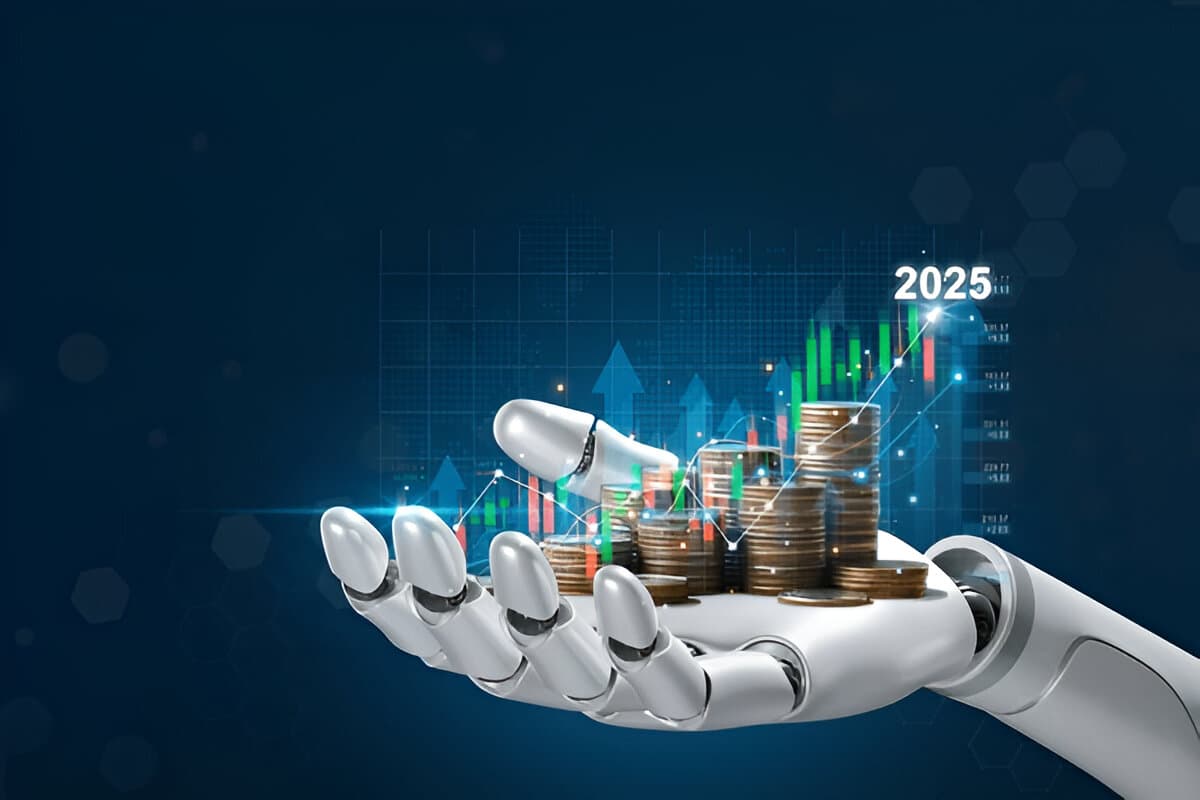
In India, AI is no longer a futuristic concept; it's already here. From your banking app's chatbot that answers your queries to sophisticated robo-advisors that help you create a personalized investment portfolio, AI is quietly revolutionizing wealth management. These AI-powered tools are a game-changer for several reasons. First, they can process vast amounts of data in milliseconds—data that would take a human advisor weeks to analyze. This means they can spot market trends and potential risks faster, leading to more informed decisions. Second, they are accessible to everyone, not just the high-net-worth individuals. They make financial planning and investment advice affordable and available to a much wider audience, which is a huge step towards financial inclusion in a country like India.
The Human Touch Remains Key
But here’s the thing—AI is a tool, not a replacement for human judgment. While it's brilliant at crunching numbers and identifying patterns, it lacks something crucial: empathy. It can't understand the emotional side of money. A human advisor knows that your decision to invest might be tied to your child's education, your parents' retirement, or your dream of buying a home. They can talk you through a volatile market situation, calming your fears and preventing you from making an emotional mistake. An AI, on the other hand, might just give you a data-driven recommendation, which can be cold and impersonal, especially during a financial crisis.
The Risks We Can't Ignore
We also need to be aware of the risks. Data privacy is a big one. As we feed more and more personal financial data into these systems, the risk of breaches and misuse increases. There's also the issue of bias. The algorithms are only as good as the data they are trained on. If the data is biased, the recommendations will be too. Moreover, in a country where financial scams are rampant, we've already seen cases of deepfake videos of public figures being used to promote fraudulent investment schemes. This shows that while technology can be a force for good, it can also be used for malicious purposes.
In Conclusion
In the end, AI is a powerful ally for wealth management, but it's not a silver bullet. The best approach is a hybrid one—using AI to handle the data-heavy tasks and leveraging human advisors for the strategic, emotional, and relationship-driven aspects of financial planning. It’s about a partnership between man and machine, where one complements the other. So, can you trust AI with your money? Yes, but only when a trusted human is in the driver's seat.