Market Volatility: Tips for Staying Calm During Market Fluctuations
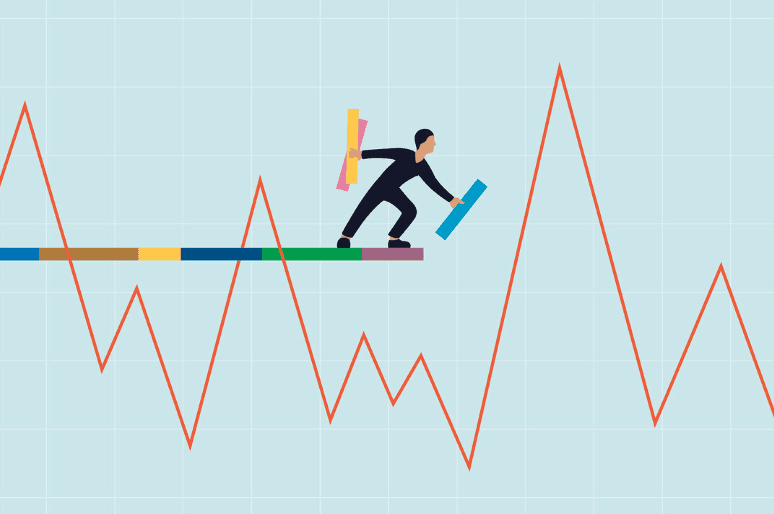
If you've spent any time looking at stock market charts, you've probably noticed they rarely move in a perfectly straight line upwards. Instead, they zig-zag, dip, and surge – a reflection of the constant ebb and flow of economic news, company performance, and investor sentiment. This "zig-zagging" is what we call market volatility, and it's an inherent part of investing. While it can feel unsettling, especially when your portfolio sees a dip, learning to navigate these fluctuations calmly is crucial for long-term investing success.
Think of the market as an ocean. Sometimes it's calm and serene, allowing for smooth sailing. Other times, storms roll in, bringing choppy waters and even big waves. A seasoned sailor doesn't panic and abandon ship; they adjust their sails, stay on course, and understand that the storm will eventually pass. As an investor, you need to develop a similar mindset.
So, how do you stay calm and avoid making rash decisions when the market gets choppy?
- ** Remember Your Long-Term Goals:** This is arguably the most important tip. Before you invest, define your financial goals and your time horizon. Are you saving for retirement in 20 years? For a child's education in 15? Short-term market dips are often just noise when viewed against such a long backdrop. Focus on the ultimate destination, not the temporary bumps in the road.
- ** Understand Market Cycles are Normal:** History teaches us that markets go through cycles of boom and bust. Recessions and corrections are a natural, albeit uncomfortable, part of the economic landscape. What's equally true is that markets have historically recovered from every downturn and gone on to reach new highs. Patience is your greatest asset.
- ** Don't Check Your Portfolio Daily (or Hourly!):** Constant monitoring of your investments can amplify anxiety. Unless you're an active trader, daily fluctuations are irrelevant to your long-term strategy. Consider checking your portfolio once a month, or even quarterly, to get a broader perspective and avoid getting caught up in the daily noise.
- Avoid Emotional Decisions: Fear and greed are powerful emotions that can derail even the best investment plans. When markets are falling, the urge to "sell everything" and cut losses can be overwhelming. Conversely, during a bull run, the temptation to chase risky, high-flying stocks can be strong. Stick to your pre-defined investment strategy and avoid impulsive actions driven by emotion.
- ** Rebalance, Don't React:** Market volatility can sometimes throw your portfolio's asset allocation out of whack. For instance, if equities have performed exceptionally well, they might now represent a larger portion of your portfolio than you initially intended. This is where periodic rebalancing comes in. It means selling some of the assets that have done well and buying more of those that have lagged, bringing your portfolio back to your target asset allocation. This is a disciplined approach, not an emotional reaction.
- ** Focus on What You Can Control:** You can't control market movements, interest rates, or geopolitical events. But you can control your savings rate, your investment strategy, your diversification, and your reactions to market news. Focus your energy on these controllable elements.
- ** Keep Investing (Especially with SIPs):** As mentioned in our previous blog, SIPs (Systematic Investment Plans) are particularly effective during volatile periods. When prices are low, your fixed investment buys more units, benefiting from rupee cost averaging. Continuing your SIPs through a downturn means you're accumulating assets at a cheaper price, setting yourself up for greater gains when the market recovers.
Market volatility is inevitable. It’s not about avoiding it, but about understanding it and building the mental resilience to ride it out. By focusing on your long-term goals, maintaining discipline, and avoiding emotional knee-jerk reactions, you can not only survive market fluctuations but even thrive through them.