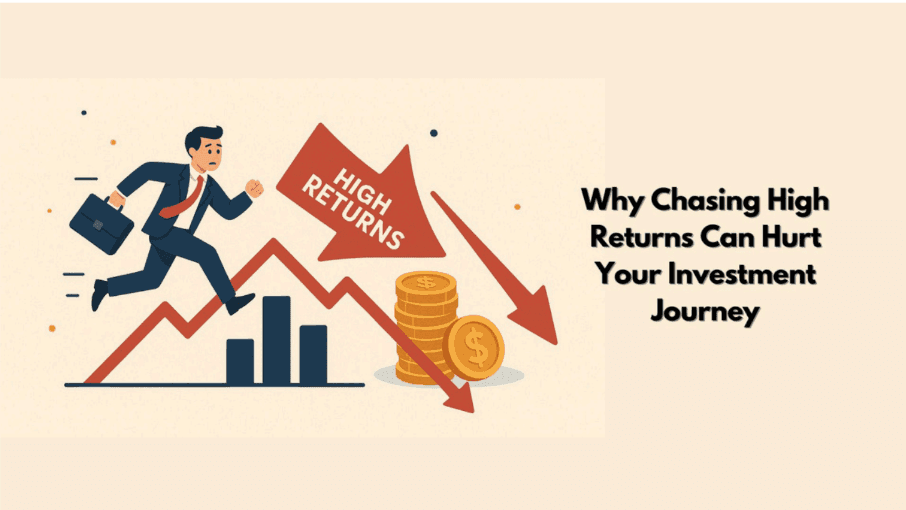
The Danger of Chasing High Returns: Why Balanced Investing Wins
Many investors are driven by the desire to earn the highest possible returns in the shortest amount of time. The thrill of quick profits or market rallies often pushes individuals to pursue high-return investments without fully understanding the risks involved. While the idea of maximizing gains is appealing, it can lead to financial missteps and undermine long-term stability. Lets understand why we're tempted to chase high returns, the dangers of this habit, and how to take a more balanced approach to investing.
Why Do Investors Gravitate Toward High Returns?
Several behavioral and external factors cause investors to focus more on high returns than on sustainable investing.
1. Fear of Missing Out (FOMO):
Trending news and social media can create pressure to act quickly. Investors often rush to join market rallies, fearing they'll miss a golden opportunity.
2. Overconfidence:
People tend to believe they can consistently make the right calls in the market. This leads to overestimating their investing skills and underestimating risks.
3. Herd Behavior:
When everyone seems to be profiting from a particular investment, it's tempting to follow the crowd —often buying high and selling low.
4. Preference for Instant Rewards:
Quick gains are exciting. As a result, many investors abandon long-term plans for short-term speculative opportunities.
5. Recency Bias:
We often assume that recent strong performance will continue, forgetting that markets move in cycles and past returns are not guarantees of future performance.
How This Impacts Your Financial Health
Chasing high returns isn't just risky—it can derail your financial plans.
- 1. Greater Exposure to Risk: Assets with high return potential usually come with high volatility. Sharp price swings can lead to panic and premature selling.
- 2. Capital Losses: Speculative investments can lead to heavy losses when market hype fades or prices crash.
- 3. Emotional Investing: Greed and fear often replace logic, leading to impulsive decisions instead of a well-structured strategy.
- 4. Lack of Diversification: Focusing on just one type of investment often means ignoring diversification, increasing vulnerability during market downturns.
- 5. Missed Long-Term Gains: Constantly chasing the next big opportunity means missing out on the steady compounding benefits of long-term investments.
Creating a Sustainable Investment Plan
To protect your wealth and grow it steadily, it's important to adopt a disciplined and well-rounded investment approach:
- Invest with purpose—whether for retirement, a home, or your child's education—so your portfolio reflects your real needs, not just returns.
- Systematic Investment Plans (SIPs) promote consistency and reduce the need to time the market. You also benefit from cost averaging.
- Spread your investments across equity, debt, and other asset classes to balance returns with risk.
- Look beyond raw returns and evaluate how much risk was taken to earn them.
- Avoid the temptation to frequently switch strategies. Long-term commitment to quality investments pays off more reliably.
- Professionals can offer clarity, help you avoid emotional pitfalls, and tailor a plan that suits your risk profile and goals.
Final Thoughts: Let Compounding Do the Heavy Lifting
While chasing high returns may seem exciting, it rarely leads to long-term success. Sustainable wealth is built through discipline, patience, and strategic planning. Focus on stability, diversify well, and let time and compounding work in your favor.
Smart investing isn't about timing the market—it's about time in the market.